Portfolio / Reflection / Growth
Hi, I'm Syahmi Rosli
A comprehensive look into my academic journey, showcasing not just the final results, but the challenges, dynamics, and creative thinking behind them.
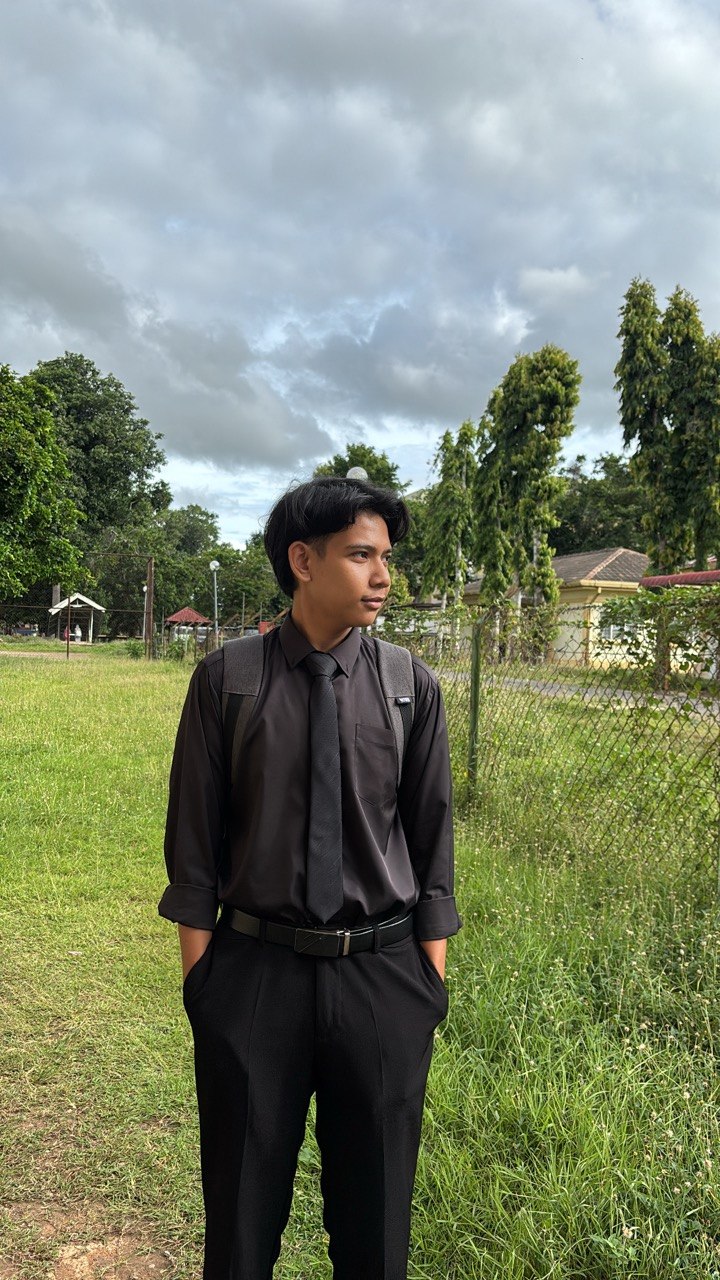
👤 Personal Profile
About Me
Assalamualaikum and hello!
I am Muhammad Syahmi bin Rosli, a Bachelor of Information Technology (Hons) student at UiTM Perlis.
This portfolio serves as my personal reflection for the ICT500 course. Throughout the semester, this subject has changed me to work more effectively and think more deeply. Honestly, I have learned far more than I initially expected.
Beyond just passing the course, ICT500 has truly enhanced my critical thinking, problem-solving abilities, and collaborative skills.
Reflecting on Learning
Educational Milestones
What I'm Learning
- Systematic Problem-Solving Developing proficiency in analytical tools—including empathy mapping, user personas, fishbone diagrams, and SCAMPER—to deconstruct intricate problems and formulate data-backed strategies.
- User-Centric Innovation Mindset Shifting away from traditional thinking patterns to architect creative, practical solutions tailored to genuine user requirements.
- Coherent & Persuasive Communication Enhancing my ability to pitch ideas and structural arguments clearly, ensuring maximum engagement and clarity during team collaborations and project presentations.
Why It Matters
- Career & Skill Advancement Building a professional toolkit of troubleshooting methodologies that allows me to approach industry-level challenges systematically.
- Actionable Solution Design Moving beyond simply pointing out flaws to actively architecting, prototyping, and validating solutions through structured technical workflows.
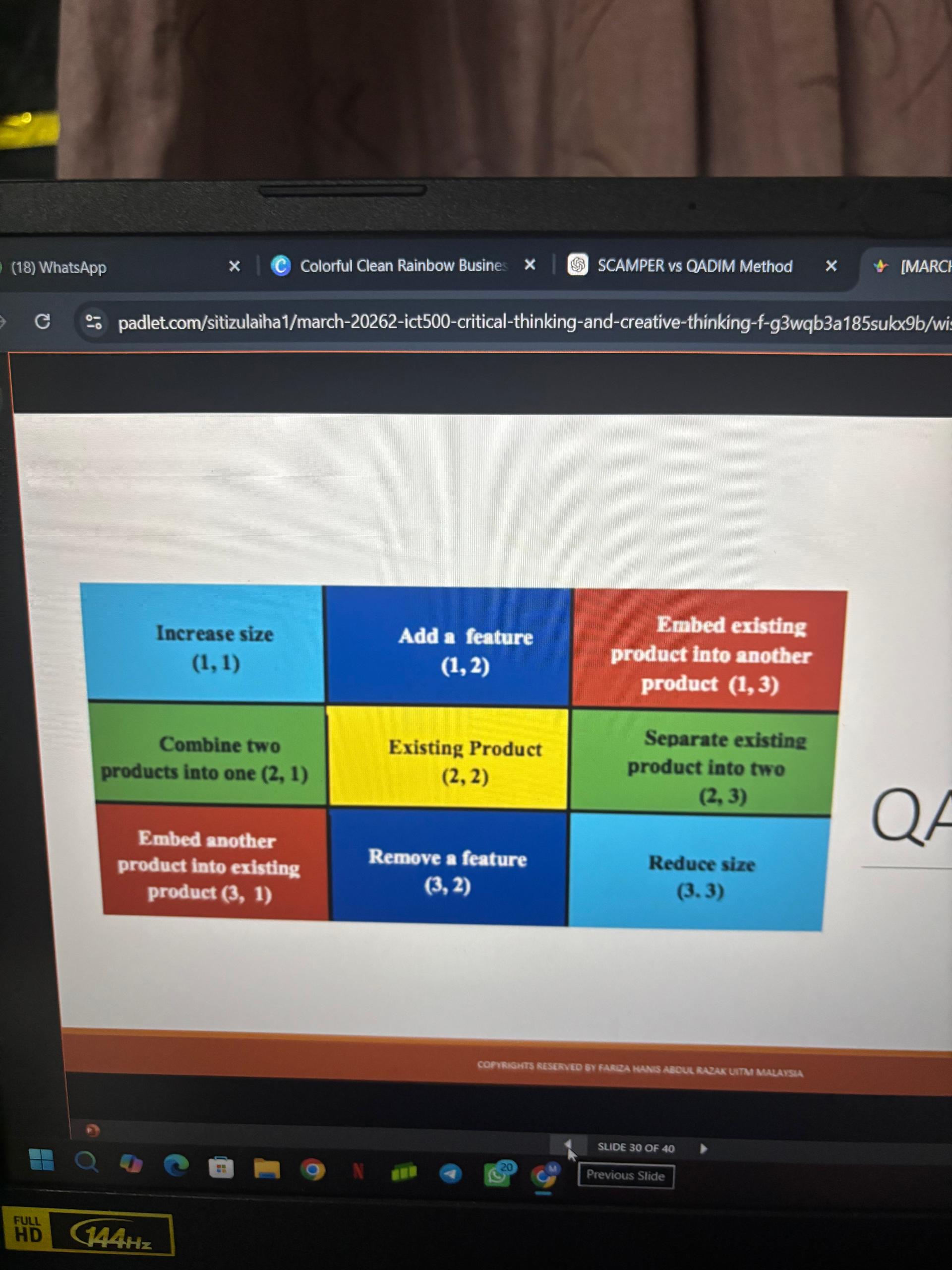
- Strategic Team Collaboration Implementing structured team frameworks like QADIM and the Six Thinking Hats to optimize group dynamics, streamline decision-making, and boost collective productivity.
Key Takeaways from This Project
- Creative Ideation Dynamics Learning to unlock out-of-the-box concepts by experimenting with unconventional brainstorming methodologies, such as reverse thinking and the "worst possible idea" strategy.
- The Power of Collective Synergy Blending diverse skill sets and viewpoints to co-create more robust project outcomes, proving that cross-functional teamwork drives true technical innovation.
- Bridging Theory and Practice Transferring abstract academic frameworks into real-world scenarios, effectively transforming conceptual knowledge into tangible, high-impact results.
Project Blueprint
Project Goal
How did I know that I was making progress toward my goals?
- Growing Optimism I feel increasingly hopeful and confident about my future prospects and our application's real-world usability.
- Visible Behavioral Shifts I notice concrete changes in my daily habits and troubleshooting workflows, aligning strictly with system objectives.
- Clearer Self-Direction I've reduced social comparisons and maintain a stronger focus on executing my unique technical and personal growth path.
What is helping me reach my goals?
- Plan Architecture Create a solid plan through deep UX empathy mapping from the initial phases.
- Optimistic Thinking Optimistic thinking when dealing with complex system structural analysis checkpoints.
- Velocity Tracking Steady discipline in tracking development velocity loops across weekly timelines.
What's preventing me from reaching my goals?
- Technical Friction Overcoming abstract initial friction and self-doubt about my technical capabilities.
- Scattered Information Handling scattered information resources and lack of a clear centralized schedule system early on.
- Time Limitations Managing structural time limitations and balancing too many academic commitments.
Synergy & Teamwork
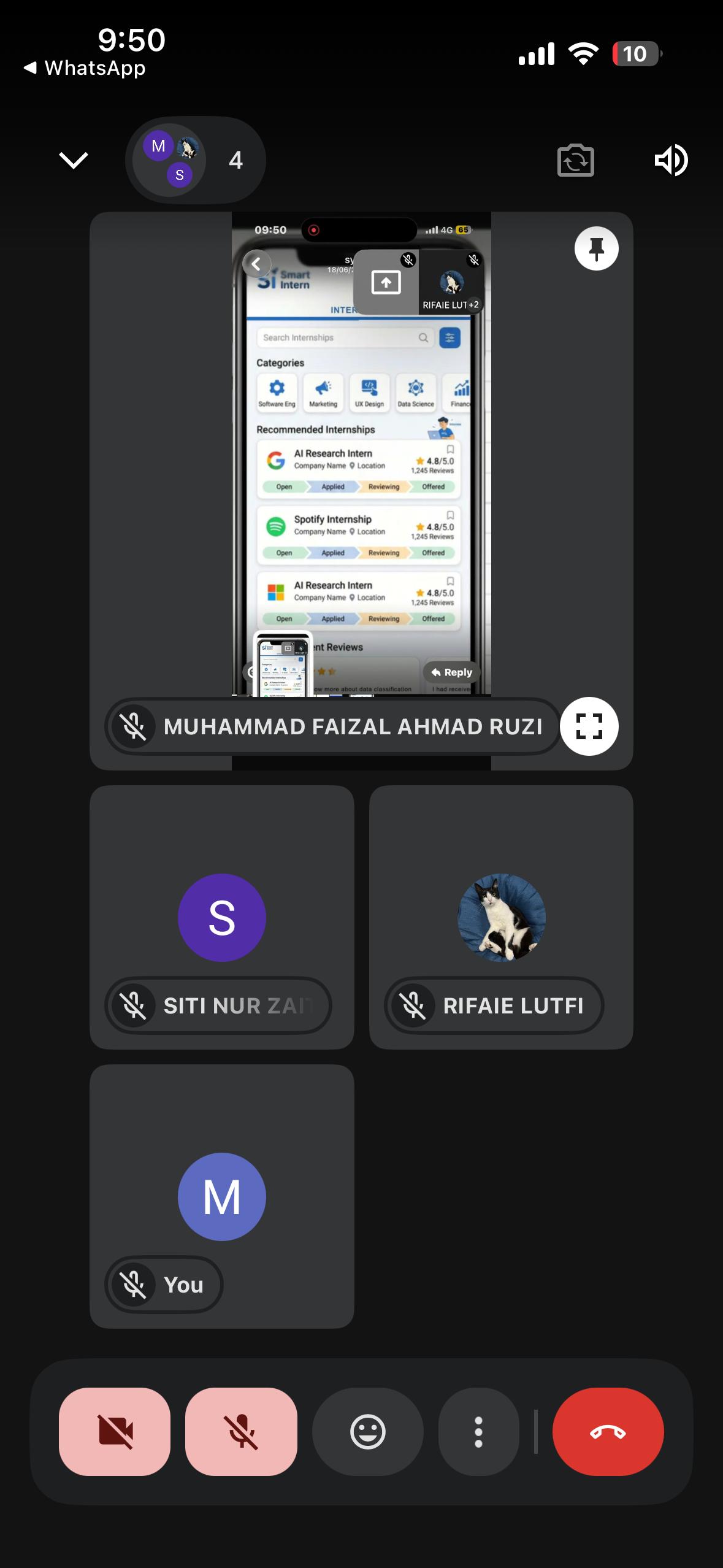
Group Dynamics
Cognitive Frameworks
Critical & Creative Thinking
The Feedback Loop Architecture
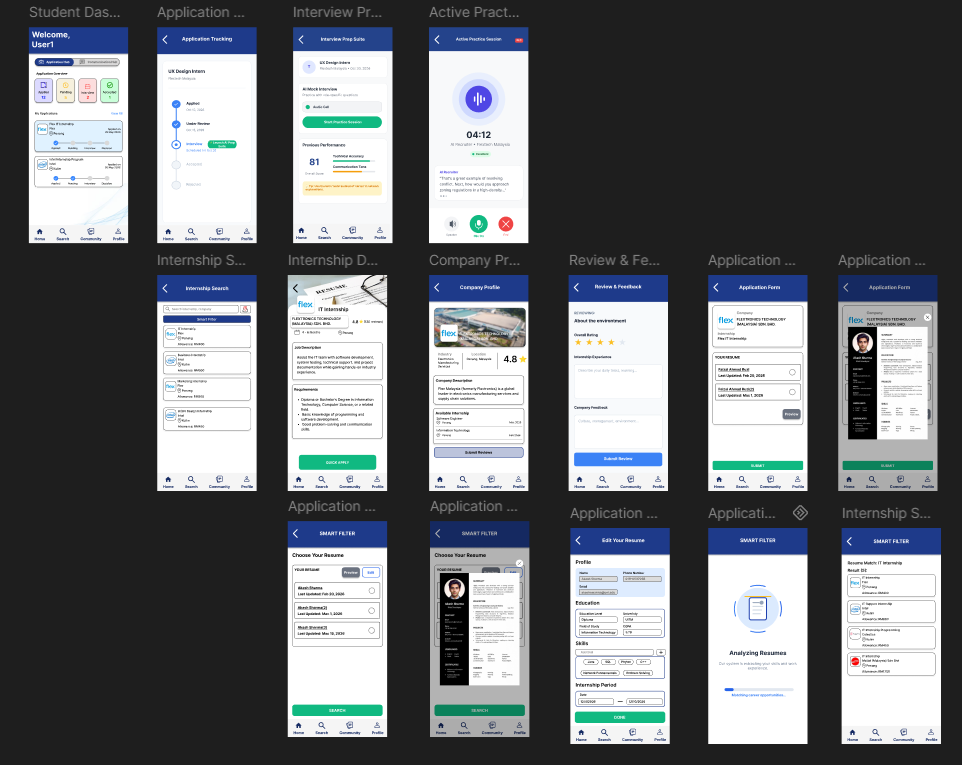
True software innovation rarely happens on the first draft. Our initial assumptions for Smart Intern were standard and straightforward. However, our real growth occurred by defending our models across every milestone presentation, actively converting critique into design breakthroughs.
Baseline Assumptions
We started with typical concepts for a basic job list platform, which were structurally challenged during early assessment evaluations.
Critique Dissection
Instead of dismissing strict workshop comments from our lecturer, we critically processed the feedback to identify blind spots in student-recruiter interaction.
Creative Pivoting
Over time, these iterations forced us to think out-of-the-box, adding advanced systems like live tracking and transparent allowance metrics.
Self-Assessment Matrix
Other Reflection Question
WHAT AM I GOOD AT?
"I am better at detecting mistakes and providing tips on how to enhance work quality. I also prefer to be inventive and think out of the box when tackling things. I am an organised individual, so I like working with a strategy and structure to keep it moving steadily."
WHAT ARE MY LIMITATIONS?
"I am not that good in creating graphic or layouts. I also like to give too much time to the perfection of everything, which is slowing me down. There are times when I end up burning myself out by attempting to achieve perfection at everything, which influences my work efficiency in general."
WHAT MAKE ME REALLY THINK?
"Unexpected challenges or problems that did not follow the plan really made me think. Those situations forced me to stop and carefully evaluate what went wrong, which required deeper thinking. They challenged me to come up with more thoughtful and creative solutions than I originally intended."
HOW DID I LEARN WHEN I MADE MISTAKES?
"Whenever I made a mistake, I took some time to really think about what went wrong and why. Instead of letting it bring me down, I tried to treat it as a chance to learn and grow. I saw those moments as part of the process of becoming better, not just in my work but also as a person. Rather than giving up, I focused on understanding the problem and finding new ways to handle it so I would not make the same mistake again."